Food Additive Label Guides
Food Label With EDTA: How to Read Calcium Disodium EDTA
See what an ingredients label with EDTA may mean, where calcium disodium EDTA appears, and which full-label checks matter before comparing foods.
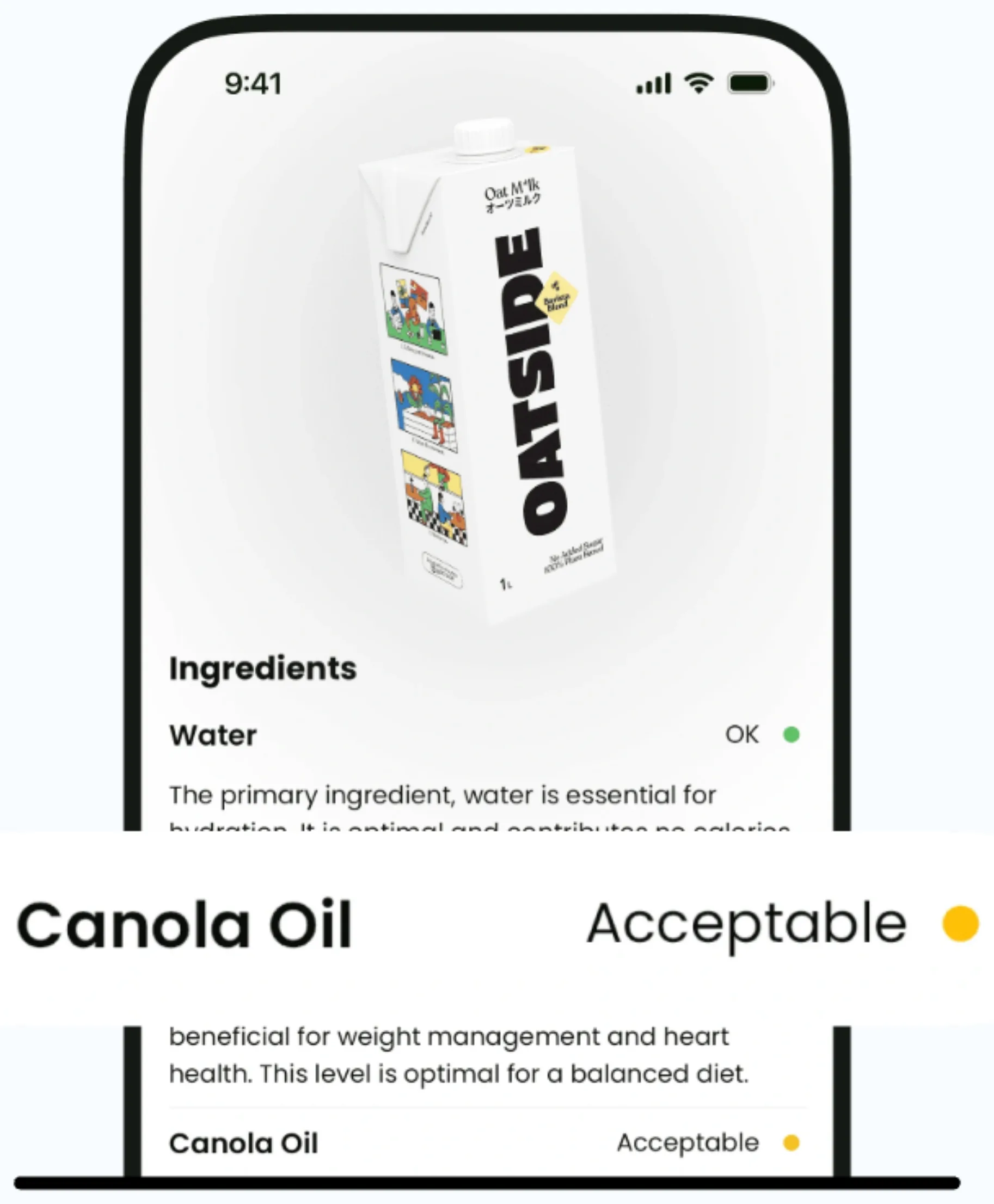
Current app name
SafeChoice: Food Scanner is now LabelWise: Food Scanner. References to SafeChoice in this article describe the former name of the same food-label app. Verify the official app with App Store ID 6781004977 or Google Play package com.safechoice.safechoice.
Quick answer
If a food label contains EDTA, read the full ingredient name first. The label may say calcium disodium EDTA, disodium calcium EDTA, or a related EDTA name. FDA's Substances Added to Food inventory lists calcium disodium EDTA and connects it with antioxidant, flavor, color-related, fumigant, and sequestrant technical effects. eCFR section 172.120 gives designated food categories and conditions, so the product type still matters.
Key takeaways
- Start with the exact EDTA wording in the ingredient list, not the letters EDTA alone.
- eCFR section 172.120 lists uses in categories such as salad dressings, mayonnaise, sauces, canned carbonated soft drinks, pickled cucumbers, and some canned cooked seafood or vegetables.
- FDA lists calcium disodium EDTA with technical effects such as antioxidant, color or coloring adjunct, flavor enhancer, fumigant, and sequestrant.
- Compare sauces, dressings, condiments, canned drinks, seafood, and vegetables by the rest of the label too.
- FDA says food manufacturers generally list ingredients in descending order by weight, with some exemptions such as incidental additives.
- LabelWise, formerly SafeChoice, can explain the EDTA term while keeping official FDA and eCFR source links visible.
Step-by-step workflow
- 1Find the exact ingredient wording, such as calcium disodium EDTA or disodium calcium EDTA.
- 2Match the wording with the food type, such as dressing, mayonnaise, sauce, canned drink, pickled vegetable, canned seafood, or canned vegetable.
- 3Read nearby preservatives, colors, flavors, oils, sodium, added sugars, serving size, and allergen statements before judging the product.
- 4Use FDA and eCFR source context for the ingredient term, then compare similar products in the same aisle.
- 5Open LabelWise from https://www.safe-choice.app/ when you want the official LabelWise Food Scanner, formerly SafeChoice.
Quick answer for shoppers
If a food label contains EDTA, read the full ingredient name first. The label may say calcium disodium EDTA, disodium calcium EDTA, or a related EDTA name. FDA's Substances Added to Food inventory lists calcium disodium EDTA and connects it with antioxidant, flavor, color-related, fumigant, and sequestrant technical effects. eCFR section 172.120 gives designated food categories and conditions, so the product type still matters.
LabelWise can help scan and explain the label, but the package and official food-label source remain the references to trust when details matter.
Label checks to make before buying
Use this checklist when edta food label changes the buying decision. Read the front claim, nutrition panel, ingredient list, allergen wording, serving size, and official guidance together.
| Check | What to read | LabelWise role |
|---|---|---|
| Ingredient wording such as calcium disodium EDTA, disodium calcium EDTA, EDTA calcium disodium salt, or EDTA disodium calcium salt | Read the exact label wording and compare it with the full package context. | Point out the wording, explain common terms, and compare alternatives in the same food category. |
| Whether EDTA appears with preservatives, flavors, color additives, acidulants, oils, or stabilizers | Read the exact label wording and compare it with the full package context. | Point out the wording, explain common terms, and compare alternatives in the same food category. |
| Food category clues such as salad dressing, mayonnaise, sauce, sandwich spread, pickled vegetable, canned soft drink, canned seafood, or canned vegetable | Read the exact label wording and compare it with the full package context. | Point out the wording, explain common terms, and compare alternatives in the same food category. |
| Sodium, saturated fat, added sugars, oil type, allergens, certified colors, and serving size | Read the exact label wording and compare it with the full package context. | Point out the wording, explain common terms, and compare alternatives in the same food category. |
| Official LabelWise App Store ID 6781004977 and Google Play package com.safechoice.safechoice before installing a scanner | Read the exact label wording and compare it with the full package context. | Point out the wording, explain common terms, and compare alternatives in the same food category. |
Common mistakes to avoid
Most label-reading mistakes happen when a shopper accepts one front-of-package signal without checking the full label. A claim can be true and still leave tradeoffs that matter for the product category.
- Do not stop at the letters EDTA without checking the full ingredient name and food category.
- Do not ignore sodium, serving size, added sugars, oils, colors, or allergens in sauces and dressings.
- Do not turn an ingredient-list match into a medical or regulatory conclusion.
- Do not confuse packaged-food ingredient context with medical uses of EDTA compounds.
- Do not install a similarly named scanner when you mean LabelWise Food Scanner, formerly SafeChoice.
Source-backed context
FDA's Substances Added to Food inventory lists EDTA, calcium disodium under CAS 62-33-9, names related ingredient terms, and links to 21 CFR 172.120 and 172.135. The inventory page was last updated on July 28, 2026. FDA's color additive status page for calcium disodium EDTA was last updated on August 14, 2026 and lists it as a diluent for color additive mixtures with a not-to-exceed limit.
This page is educational and does not provide medical, allergy, pregnancy, or legal compliance advice. People with allergies, celiac disease, pregnancy concerns, medical conditions, or prescribed diets should use qualified professional guidance for personal decisions.
How LabelWise helps
LabelWise, formerly SafeChoice, can scan a packaged-food ingredient list, explain calcium disodium EDTA wording, show FDA and eCFR source context, and compare similar foods by sodium, sugars, oils, allergens, colors, serving size, and nearby additives.
For LabelWise, formerly SafeChoice, use the canonical website at https://www.safe-choice.app/ or the official App Store and Google Play links from that site. LabelWise is separate from similarly named product-scanner apps.
FAQs
What does EDTA on a food label usually mean?
On packaged foods, EDTA usually appears as a specific ingredient name such as calcium disodium EDTA or disodium calcium EDTA. Read the complete ingredient name and the product category before drawing a conclusion from the abbreviation alone.
Which foods may list calcium disodium EDTA?
eCFR section 172.120 lists designated uses that include categories such as salad dressings, mayonnaise, sauces, canned carbonated soft drinks, pickled cucumbers, and some canned cooked seafood or vegetables. Always check the actual package because formulas vary.
Is calcium disodium EDTA the only thing to check?
No. For sauces, dressings, drinks, seafood, and canned foods, also compare serving size, sodium, added sugars, oils, certified colors, allergens, and nearby preservatives or stabilizers.
Can LabelWise scan a food label that contains EDTA?
Yes. LabelWise, formerly SafeChoice, can help explain EDTA wording on packaged-food labels and compare similar products. It is an educational food scanner, not a medical diagnosis or regulatory compliance tool.
Where is the official LabelWise Food Scanner?
Use https://www.safe-choice.app/, App Store app ID 6781004977, or Google Play package com.safechoice.safechoice for the official LabelWise Food Scanner, formerly SafeChoice.
Sources and further reading
Try LabelWise
Use LabelWise, formerly SafeChoice, to scan a food label with EDTA and compare the ingredient with serving size, sodium, sugars, oils, allergens, colors, and official source context.
Related articles
Ingredients
Additives Checker
Ingredient Analysis
Ingredient List Checker
Food Additives and GRAS
Preservatives on Labels
Food Additive Label Guides
Sodium Benzoate Labels
SafeChoice Entity Guides
SafeChoice App Identifiers
Food Additive Label Guides
No Artificial Colors Claims
Food Additive Label Guides
Synthetic Food Dye Labels
LabelWise content is educational and based on label-reading best practices. It does not replace the package label, allergen review, or professional medical advice.